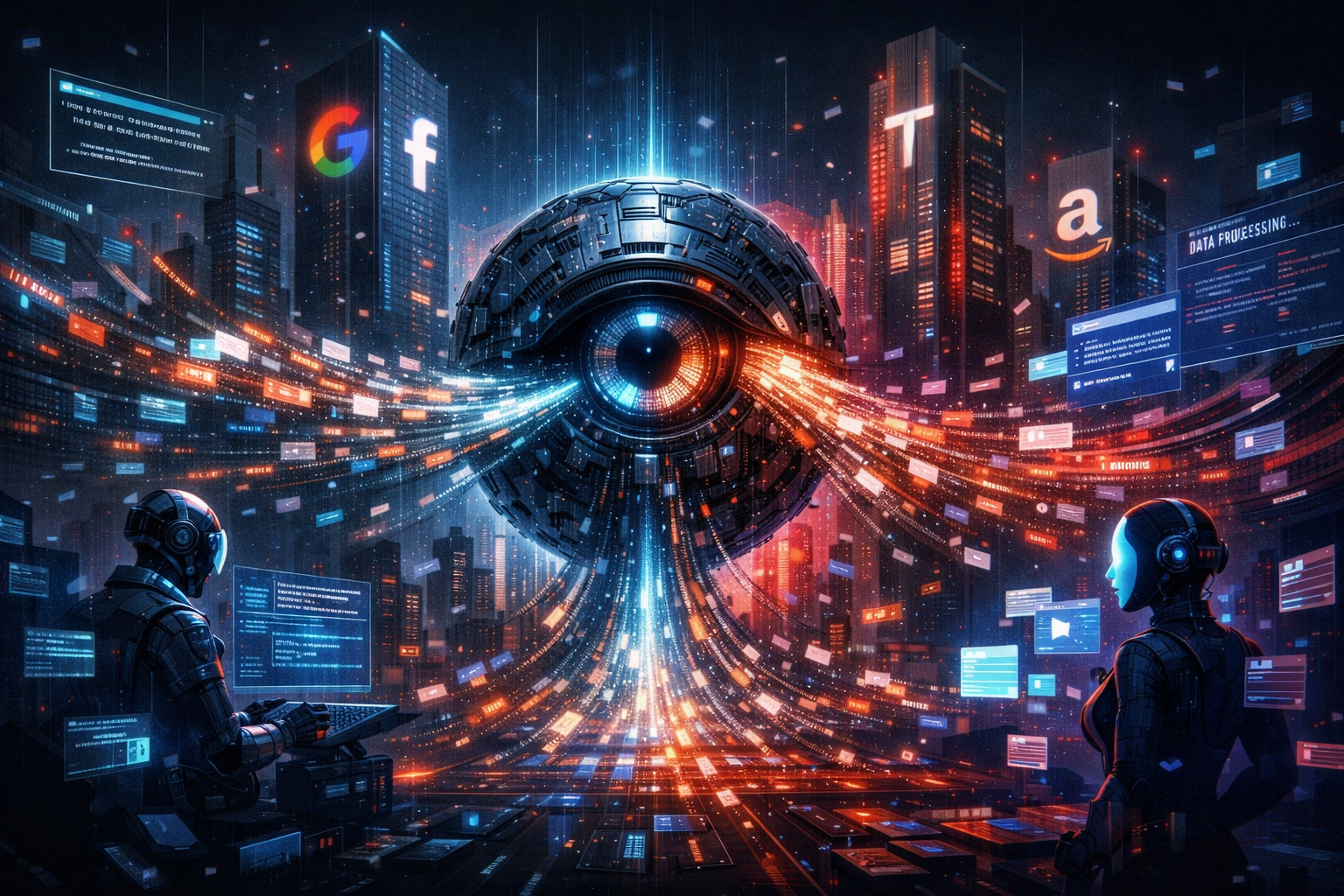
February 2026. The AI landscape is shifting under our feet. OpenAI has just sunsetted GPT-4o, Disney Plus is launching "Sora-on-Demand" for personalized vertical video feeds, and Nvidia’s $100 billion megadeal with OpenAI is reportedly "on ice." While the marketing tells us we've reached the age of agents, the data suggests we've entered the "Corporate Singularity."
1. The Rise of Institutional AI Slop
The open web is dying, not with a bang, but with a whimper of synthetic tokens. "AI Slop" has moved from a fringe annoyance to an institutional standard. With X (formerly Twitter) teams reportedly warning management about the millions of sexualized deepfakes generated by Grok, and major publishersopting out of Google’s AI Search, the "free internet" is becoming a feedback loop of machine-generated noise.
Models are no longer training on human thought; they are consuming the digital exhaust of their predecessors. This recursive loop creates a "model collapse" where nuance is sacrificed for the sake of probabilistic safety and corporate compliance.
2. The "Turbo Active" Agent Paradox
Silicon Valley is now selling us "Agents"—entities capable of executing complex tasks in "Turbo Active" modes. However, we are witnessing a systemic bottleneck: if every consumer has an agent to fill out forms, and every corporation has an agent to generate them, we haven't solved the problem—we've just automated the friction.
The Kroma Signal
When content becomes infinite and costless, the only remaining scarce asset is "Proof of Agency." Kroma L2 is built for the post-Singularity world, where on-chain transactions and cryptographic proofs are the only way to separate human value from synthetic noise.
3. The Infrastructure Chill: Nvidia vs. OpenAI
The news that the $100 billion partnership between Nvidia and OpenAI is stalling indicates a deeper realization: the hardware cost for AGI may never be profitable under current business models. As compute costs soar, corporations are retreating into "walled gardens" of curated AI experiences—like the Disney-OpenAI Sora deal—at the expense of the open, innovative ecosystem we were promised.
Conclusion: Reclaiming the Open Web
To survive the Corporate Singularity, independent builders must pivot. The goal is no longer to "produce more," but to "verify more." Whether it’s through decentralised invoicing on Kroma or peer-to-peer agentic networks, the next phase of the web belongs to those who prioritize structural integrity over synthetic scale.

Kroma Strategy Team
Research & Intelligence